6 October
2005 – Among the hundreds of thousands who were exposed to radiation during the
Chernobyl disaster 20 years ago, only 4,000 people will die from acute
radiation and cancer, but many more suffer from the lingering effects of
poverty, and lack of information on how to live in the contaminated areas and
on how to regain their livelihoods, according to a new United Nations report.
Resources
should be refocused on highly contaminated areas and government programs should
be redesigned to “help those genuinely in need,” said the report, “Chernobyl:
The True Scale of the Accident,” conducted by the Chernobyl Forum, which
includes eight specialized UN agencies and the governments of Belarus, Russia
and the Ukraine.
Although
the disaster had terrible consequences for people living in the region, “we
have not found profound negative health impacts to the rest of the population
in surrounding areas, not have we found widespread contamination that would
continue to pose a substantial threat to human health,” Burton Bennett,
chairman of the Chernobyl Forum, said.
Instead,
poverty, lifestyle diseases related to alcohol, smoking, stress and poor diets
not rampant in the former Soviet Union, and mental health problems pose a far
greater threat to local communities that do radiation exposure. The mental health impact was far larger than
the physical health problems, attributable to the damaging impact of lack of
information, negative self-assessments, belief in short life expectancy, and
“lack of initiative, and dependency on assistance from the state,” it added.
Relocation
of 116,000 people at the time of the accident also proved to be “highly
traumatic,” the report said.

With appreciation to http://whyfiles.org/020
Consisting
of 100 scientists, the panel recommended that the Chernobyl assistance programs
that had been set up after the disaster to help mend the lives of residents
should be more targeted, eliminate benefits to people in outlying areas,
improve primary health care, support safe food production, and encourage small
and medium sized business enterprises.
Among those
people considered most in need are an estimated 4,000 out of 600,000 emergency
workers, evacuees and residents who may die from acute radiation syndrome (ARS)
or radiation-induced cancer and leukemia.
Since the 1986 disaster, 50 emergency workers died of ARS, and 4,000
children have contracted thyroid cancer.
Despite its sometimes physically debilitating effects, thyroid cancer is
treatable and only nine children have died from the disease.
Stressing
the need to scale back large subsidy programs for residents, better information
needs to be provided by the governments of Belarus, Russia, and the Ukraine,
“not only about how to live safely in regions of low-level contamination, but
also about leading healthy lifestyles and creating new livelihoods,” said
Louisa Vinton, Chernobyl focal point at the UN Development Programme,
(UNDP).
Attention
should also be paid to the environmental problems brewing on the horizon, such
as how to get rid of the tons of highly radioactive contaminants at and around
the Chernobyl site, and the slow disintegration of the sarcophagus built to
contain the damaged reactor which had degraded, and poses a risk of collapse
and the release of radioactive dust, the report added.
The
Chernobyl Forum is composed of the International Atomic Energy Agency (IAEA),
the UNDP, the Food and Agriculture Organization (FAO), the UN Environment
Programme (UNEP< the UN Office for the Coordination of Humanitarian Affairs
(OCHA), the UN Scientific Committee on the Effects of Atomic Radiation
(UNSCEAR), and the World Bank.
With
appreciation to UN News Centre, Poverty, Mental Health Greatest Stumbling
Blocks for Chernobyl Survivors, UN, October 6, 2005 at http://ww.un.org/apps/news/story
EU:
Mental Health: Commission Adopts Green Paper on Illness Affecting 1 in Four
Adults
October 17,
2005 – The European Commission today adopted a Green Paper on Mental Health to
tackle mental illnesses, which now affect over one in four adults in the
European Union. The Green Paper aims to launch a public consultation on how
better to tackle mental illness and promote mental well-being in the EU. Mental illness affects over 27% of European
adults every year, and is responsible for the majority of the annual 58,000
deaths by suicide. The Commission is
initiating a wide-ranging debate on the issue, to highlight the importance of
mental well-being and to examine how best to develop a comprehensive EU
strategy on mental health.
Markos
Kyprianou, Commissioner said that the issue has been swept under the carpet for
too long. The Commission is determined
to raise awareness of this problem and to work towards improving the mental
health of the EU population as a whole.

With appreciation to http://gaggio.blogspirit.com/archive/2005
The Green
Paper on Mental Health proposes three main areas for the EU level action: 1) Opening up a dialogue with Member States
to agree on an action plan on mental health. 2) Laune an EU Platform on Mental
Health to trigger a wide range of stakeholders to look at how to integrate
mental health into different sectors and EU policies, and how to develop ethical
considerations such as fundamental rights of mental illness sufferers. 3)
Building up mental health information resources at EU level, including
monitoring trends, collecting data, and identifying the best practice.
The
proposals outlined in the Green Paper are part of the Commission’s follow-up to
the WHO Ministerial Conferences on Mental Health held in Helsinki in January,
2005 where the 52 Member States in the WHO European Region and the European
Commission endorsed the Mental Health Declaration and Action Plan for Europe.
On October
24, the Commission will host a conference on Mental Health in Luxembourg, to
officially launch the consultation process, Commissioner Kyprianou, a number of
Member States, health ministers, MEPs, and WHO Regional Director for Europe,
Marc Danzon, will be among those present at the conference to contribute to the
debate.
Governments,
NGOs, stakeholders, and individual citizens are invited to comment on the
proposed areas for action outlined in the Green Paper and on the role of the EU
in addressing the issue of mental health.
The consultation will continue until April 30, 2006, after which time
the Commission
will use
the input received to draw up a
proposal on
the EU-wide Mental Health Strategy.
With
appreciation to World Federation for Mental Health, European: Commission
Adopts Green Paper on Illness Affecting 1 in Four Adults, October, 2005 at www.wfmh.org/documents
UN
Agency Launches First-Ever Ad Campaign Highlighting Children With HIV/AIDS
October 27,
2005 – The United Nations Children’s Fund (UNICEF) launched the first ever
outdoor ad campaign in conjunction with a major media company to raise
awareness and funds to fight the impact of HIV/AIDS on children they said
today.
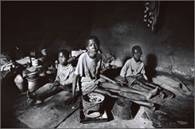
With appreciation to www.who.int/voicesofhope
The global
outdoor advertising campaign will focus attention on the hundreds of millions
of children who are orphaned or left vulnerable because of HIV/AIDS every year,
while also raising the funds to help them, and is a joint effort of the UNICEF
and Clear Channel Outdoor, a subsidiary of Clear Channel Communications.
With
appreciation to UN News Service, October 27, 2005, UN Agency Launches
First-Ever Ad Campaign Highlighting Children With HIV/AIDS
At UNNews@UN.Org
Islamic
States Gather at UN-Backed Meeting to Aid Quarter of World’s Children
New York,
November 8 – With some 4.3 million children under five dying each year from
preventable disease and
malnutrition,
in Islamic countries, the United Nations Children’s Fund (UNICEF) is
co-organizing a three-day meeting in Rabat, Morocco, intended to make a lasting
difference for more than a quarter of the world’s children. “I can think of no better focus for Islamic
solidarity than the welfare of children and I congratulate the OIC, ISESCO and
UNICEF on this important initiative,” Secretary-General Kofi Annan said in a
message to yesterday’s opening session, referring to the other sponsors –the
Organization of Islamic Conference and the Islamic Educational, Scientific and
Cultural Organization.
With
appreciation to UN News Service, Islamic States Gather at UN-Backed Meeting
to Aid Quarter of World’s Children at UNNEWS@UN.org
With appreciation to www.healthpromotingschoolco.uk
Three
Weeks After Pakistani Quake, 200,000 Victims Have Yet to Receive Aid – UN
New
York, October 28, 2005 – Three weeks
after an earthquake devastated northern Pakistan, some 200,000 people have
still not received any assistance at all, the United Nations emergency relief
office reported today, underscoring the dire situation in the remote region
where tens of thousands could die without urgent aid.
Giving its
latest update two days after Secretary-General Kofi Annan told a donors’
conference the world community must prevent a second wave of deaths from the
quake, which has already killed more than 50,000 people, the UN Office for the
Coordination of Humanitarian Affairs (OCHA) said up to, 30% of affected
villages had yet to be reached.
Echoing Mr.
Annan’s warning, the UN World Health Organization (WHO) said today hundreds of
thousands of people face the unnecessary risks of death, illness, and further
injury as the harsh Himalayan winter approaches. People need shelter, safe drinking water, and
access to health care now and throughout the winter in order to survive.
“Without
more help now, the second wave of deaths in Pakistan is coming. We cannot wait to see images of people
freezing to death or dying of preventable disease before we act,” WHO
representative for health action in crisis, Ala Alwan, said.
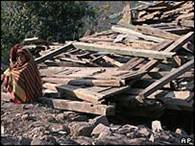
With appreciation to http://news.bbc.co.uk
“With the
money received so far, WHO, its partners and the Ministry of Health have made a
difference to people’s lives. The
revised appeal will scale-up WHO’s support,” he added referring to the
additional $238 million the UN is now seeking on top of its original $312
million Flash Appeal.
The UN
World Food Programme (WFP) has already increased its estimate of the number of
people in potential need of food aid to get through the winter to 2.3 million
people. Apart from its immediate death
toll, the quake injured some 74,000 people and left more than 3 million others
homeless.
“These
people were already poor before the earthquake hit. In a matter of just a few minutes everything
they had – their homes and livelihoods disappeared,” said WFP Programme Adviser
Anette Haller, who headed an assessment team in the area.
“Now they
are completely desperate. We have to
reach them before winter does – and that means within the next three weeks,”
she warned. WFP has so far distributed
3,000 tons of food aid to half a million people.
UN
Children’s Fund (UNICEF) Executive Director Ann Veneman will start a two-day
visit to the quake zone on Sunday. She
will visit hard-hit communities and meet with Pakistani officials. Within the last 10 days UNICEF has helped to
vaccinate 65,000 children against measles and tetanus.
For its
part, the UN High Commissioner for Refugees is continuing to provide blankets,
tents, plastic sheets, jerry cans, and burial cloths. Its airlift from Turkey, organized in
cooperation with the North Atlantic Treaty Organization (NATO), is now in its
ten day and has so far delivered more than 450 tons of urgently needed
supplies.
“The window
to reach earthquake survivors in the remote mountains and high valleys of
quake-hit Pakistan is fast closing with the onset of cold weather,” UNHCR
spokesman told a briefing in Geneva.
“This is still a life-saving operation and every minute counts.”
With
appreciation to UN News Centre, Three Weeks After Pakistani Quake, 200,000
Victims Have Yet to Receive Aid, October 28, 2005 at http:///www.un.org/news
Islamic
States at Un-Backed Meeting Call For End to Female Genital Mutilation
New York,
November 9 – A United nations-backed conference of ministers from nearly 50
Islamic countries and representatives of more than 20 international, Arab, and
Islamic organizations has called for an end to harmful traditional practices,
including child marriage, female genitalia mutilation, and gender
discrimination in education.
A
declaration issued at the end of the First Islamic Ministerial Conference of
the Child, co-organized by the UN Children’s Fund (UNICEF), the Organization of Islamic
Conference (OIC) and the Islamic Educational, Scientific, and Cultural
Organization (INESCO), also urged action to address the unacceptably high rates
of child and maternal mortality in some Islamic countries.
With
appreciation to UN News Service, Islamic States at UN-Backed Meeting Call
for End to Female Genital Mutilation, November 9, 2005 at UNNews@UN.org
Tajikistan:
Mental Health Crisis Claims Disputed
November 23,
2005 – It is widely believed in Tajikistan that more and more people suffering
from serious mental illnesses are walking the streets and present a danger to
the rest of the society. But the
authorities argue that the figures for psychiatric problems do not show a rise,
and insist they are doing their best to make provision for high-risk
cases.

With appreciation to http://tajikistan.ive.org
Many
Dushanbe residents interviewed by IWPR suggested that the capital was full of
mentally unstable and potentially dangerous characters.
“There are
so many of them wandering around the city that it’s getting scary. What are the doctors up to? Was a typical response, in this case, from a
pensioner who had recently had a confrontation with a homeless man he believed
was mentally ill. But are such views
anything more than prejudice?
One doctor
from the National Clinical Centre for Psychiatry told IWPR on condition of
anonymity that schizophrenia and related conditions were definitely on the
increase. “ A steady trend can be seen
in the spread of schizophrenia. There
are currently 11,000 patients registered with psychiatric institutions who are
suffering from schizophrenia,” he said.
Uktam
Bobojonov, chief of the Medical Services Department at the health ministry
claims that his data does not show a rise in mental illness, however he accepts
the fact that the funding for the sector remains miniscule and acknowledges the
role of international aid agencies, particularly Medecins Sans Frontieres –
Netherlands, which filled the gap with donations of medical supplies; and the
World Food Programme which has provided food for the country’s mental
healthcare units.
Institute
for War & Peace Reporting, Artem Fradchuk, Tajikistan: Mental Health
Crisis Claims Disputed, November 23, 2005 at info@iwpr.net
Ethiopian
Orphans, Street Children Share Their Dreams In UN Children’s Fund Book
New York,
November 25, 2005 – Hundreds of street children, orphans of war, and other
vulnerable youngsters all across Ethiopia talk about their devastating losses
and their dreams of a future free from poverty in a new collection of stories
by the United Nations Children’s Fund called “We have a Dream.”

With appreciation to www.isbn.nu
“The voices
of vulnerable children are too often overlooked or ignored in Ethiopia and many
other countries,” UNICEF Country Representative Bjorn Ljungqvist said. “One of the main things that has stuck out is
the huge appetite these children have for education. They are desperate to go to school. They see
education as the main way of achieving their dreams.”
With
appreciation to UN News Centre, Ethiopian Orphans, Street Children Share
Their Dreams in UN Children’s Fund Book, November 25, 2005 at http://www.un.org/news
From Sex
Workers to Truckers, UN Food Agency Adds Protection to Arsenal
New York,
November 29, 2005 – Sex workers, truck drivers, store personnel and port
workers now all have access to information, counseling, on HIV and treatment
for sexually transmitted disease where and when they need it most thanks to an
innovative new project launched by the United Nations World Food Programme
(WFP) and its partners in Malawi.

With appreciation to http://www.voanews.com
Aware that
its own transport workers might be contributing to the spread of HIV, WFP and
TNT, the global mail, express, and logistics company, have set up the of its
Wellness Centres at the Mwanza border crossing to give truckers and the
communities they pass through access to life-saving information on how to avoid
contracting HIV and passing it on to others.
With
appreciation to UN News Service, From Sex Workers to Truckers, UN Food
Agency Aids Protection to Arsenal, November 29, 2005 at UNNews@UN.org
From the
Rising Nepal
Mental
Health – an Overview
It is
estimated that over seven million people in Nepal are in need of mental health
services and 50% of them are under the age of 35. This makes it necessary to treat it as a
national emergency. Abject poverty
gripping over 45% of Nepal’s population has played havoc with people’s mental
health. The situation has been
compounded by the lack of facilities for the treatment of mental
disorders.
The
government has allocated not even a percent of the total health budget to
mental healthcare, as compared to 10
to 20
percent in the developed countries.
There are just 25 psychiatrists in Nepal, compared to 100 in
Australia. As a result, most turn to
faith healers, religious shrines and quacks rather than consult a doctor or a
psychiatrist. And over 90% of the people
with mental illness are cared for within their communities and may never even
receive treatment. Because of the lack
of resources and trained healthcare workers, and the social stigma associated
with them, treatment of mental disorders is still relegated to the purview of
witch-hunters and magic men.
In Nepal,
nearly 90% of the people with known mental disorders never seek help from a
health professional. Depression, which
is one of the most common mental disorders, can be reliably diagnosed in
primary care. Anti-depressant
medications and brief, structured forms of psychotherapy are effective for
60-80% of those affected and can be delivered in primary care. However, fewer than 10% of those affected receive
such treatment. Having any sort of
psychological disorder carries some amount of stigma with it. Over the past few years, as more and more
people are coming forward with depression and anxiety disorders, the stigma for
these disorders has decreased. Other
disorders such as schizophrenia and dissociate identity disorders are still so
misunderstood by others that we feel that need to hide our illnesses.
There is
one problem with that. Hiding the
illness can keep us from curing it. This
means problems often go untreated. Some
people are going to judge you, and you may see close friends take a big step
backwards in your relationship. I have
found that these steps back are generally temporary while my own friends try to
make sense of what is going on.
Sometimes, however, they turn their back completely and friendships die.
One cannot
avoid abandonment by a judgmental person, but you can decide to share less with
those people who may appear judgmental.
It is important to consider some of the reasons a person might appear
judgmental. They may simply be
frightened by something they do not understand.
The very nature of mental illness creates uncertainty in the mind of a loved
one. How will they know what to
expect? What will be the parameters of your
behavior and how it might affect them?
Which brings up, perhaps the most common issue of all, the issue of
stigma.
Mental
illness because of its great stigma feels a threat to many. Personal self-esteem levels of the individual
friend or loved one may often determine how they will respond to these
issues. It may also be possible that a
friend or a loved one may have his or her own mental illness to cope with and
is unwilling to discuss it with you. Any
your strength and willingness to share may be a blow to their self-esteem, or
in the opposite direction, a threat to their choice to remain closeted about
their own struggle.
In any
case, an option is to try and educate them.
Put yourself in their shoes, what if they had approached you with
similar views? Send an email with some
links to where they may learn more about mental illness and your disorder. They may surprise you with their interest to
understand.
With appreciation to http://images.google.com
Similarly,
a limited range of medicines is enough to treat a majority of mental
disorders. But major parts of the
country where there is inhabitation, however, do not have the three most
commonly prescribed drugs used to treat schizophrenia, depression, and epilepsy
at the primary health level. The
solution lies in adopting a serious awareness and proactive approach to
pre-empt mental health disorders.
The first
solution would be within the purview of the government and
responsible
private bodies and the latter, at an individual level, an alertness about the
need to slow down the pace of living, or modifying lifestyles, including
consumption patterns both amongst the rich as well as the poor. As pointed out by the World Health
Organization, the government needs to focus on solutions for mental health that
are already available and affordable. It
should move away from large mental health institutions and integrate mental
healthcare with the primary and general healthcare system.
With
appreciation to World Federation for Mental Health, P. Gopakumar, From the
Rising Nepal Mental Health-An Overview, October, 2005, at www.wfmh.org/documents
UN Calls
For Strong Action to Eliminate Violence Against Women
New York,
November 25, 2005 – The United Nations today marked the International Day for
the Elimination of Violence against Women with calls for states to take legal
action against the global scourge, for societies to change a mindset that
permits such abuse, and for women themselves to stand up and speak out against
a culture of shame.
“Violence
against women is the most pervasive violation of human rights, occurring every
day, in every country and every region, regardless of income or level of
development,” UNIFEM Executive Director Noeleen Heyzer said, citing a UN World
Health Organization estimate that nearly one in four women will be raped,
beaten, coerced into sex or otherwise abused in her lifetime, sometimes with
fatal consequences. She called for three
major actions to break “this vicious cycle” of violence: countries must pass
and enforce laws to deter acts of violence against women and reduce the spread
of HIV; women who have suffered abuse must speak out to break the culture of
shame and stigma; and awareness must be raises on the links between violence
against women and HIV/AIDS, especially by the media.
With
appreciation to UN News Centre, UN Calls for Action to Eliminate Violence
Against Women, November 25, 2005 at www.un.org/news
·
related to people with mental disorders Improve and increase the
financial and human resources allocated to mental health
·
Be familiar with international and national human rights standards and
norms
·
Ensure that policies in the education, labour, criminal justice and
general health care system all act to promote health and protect human rights.
·
Include coverage for mental health care in both public and private
insurance schemes.
·
Implement mental health policies and laws that promote human rights,
deinstitutionalization, integration into general health care, and development
of community care
·
Set up monitoring mechanisms to ensure that human rights are being
respected in all mental health facilities.
Health Care
Workers
·
Respect the dignity, protect the
rights, and promote the automony and liberty of people with mental disorders.
·
Ensure that informed consent of people with mental disorders is the
basis for all treatment provided.
·
Involve people with mental disorders in the deelopment of their
treatment plan.
·
Involve families in the treatment and care of their relatives with
mental disorders.
·
Inform decision makers what resources and other support is needed in
order to provide good quality mental health care.
People with
Mental Disorders
·
Denounce human rights violations including outdated and inhuman forms
of treatment, poor service delivery, inaccessible care and abusive use of
involuntary admission and treatment.
·
Advocate for your participation in the development and implementation
of policies and laws to improve human rights and mental health services.
·
Be familiar with human rights under international human rights law and
national laws.
·
Join forces with other people with mental disorders in order to support
each other and carry out activities to change attitudes towards people with
mental disorders and combat stigma and discrimination.
User
groups, family groups, advocacy organizations, and other non-governmental
agencies
WHO/What
can you do to help?
·
Summarize and educate the public about mental health and mental
disorders, and raise awareness of the rights of people with mental disorders.
·
Advocate for the provision of good quality mental health services in
primary health care, general hospital settings and in the community.
·
Advocate for your participation in the development and implementation
of policies and laws to improve human rights and services for people with
mental disorders.
·
Organize informal community mental health services such as counseling,
self-help groups, both for individuals with mental disorders and for families,
drop-in centers, community re-integration programmes case management, outreach
programmes, and crisis services.
·
Provide preventive and promotive services, such as school-based mental
health promotion programmes.
·
Collaborate with other non-governmental organizations that share
similar goals within the country, region, and world.
Foundations
·
Support the developemtn and implementation of country mental health
policies, plans, and laws that promote and protect human rights.
·
Support the development of mental health services in primary health
care, general hospitals, and in the community.
·
Support the creation and activities of mental health service user,
family, and advocacy organizations.
·
Support research to evaluate the impact of mental health policies and
laws.
·
Support research to develop effective mental health interventions in primary
care, general health, and community facilities.
·
Provide policy and health systems training for mental health policy
makers and planners.
·
Provide appropriate mental health training for primary health care and
community workers.
·
Incorporate training on mental health and human rights issues into
undergraduate and postgraduate curricula for health and mental health
professionals including those in primary care.
·
Conduct research into mental health policy and service planning,
including evaluation of policy implementation, and models of service
organization and planning.
·
Conduct research on effective mental health interventions at primary
care and in community facilities.
·
Provide up-to-date undergraduate and postgraduate curricula based on
evidence-based approaches, in keeping with policy priorities.
·
Provide specialist supervision for both the delivery and planning of
mental health services through primary care and community care.
Professional organizations
·
Contribute to the debate on policy and legislation development.
·
Set quality standards for mental health workers at all
levels-hospitals, primary health care, and community settings.
·
Raise awareness of constituencies on mental health and human rights
issues.
·
Provide accreditation for mental health professionals.
·
Support the change of roles among primary health care staff from
working predominantly with physical disorders to a more holistic approach to
health care that incorporates physical and mental health.
·
Support the change of roles among mental health staff from working in
predominantly institutional settings to predominantly community-based settings.
The media
·
Avoid stereotyping, sensationalism, and perpetuating myths and
misconceptions when reporting on mental health issues.
·
Present mental health issues with compassion, highlighting what can be
achieved with adequate financial and human resources.
·
Highlight the human rights of people with mental disorders.
World
Health Organization (WHO and Office of the High Commissioner for Human Rights
In
cooperation with
The
NGO Committee on Mental Health
Present a special panel
discussion to commemorate
International
Human Rights Day 2005
“The
Protection and Promotion of Human Rights
Of
Persons with Mental Disabilities”
Thursday,
8 December 2005
1:15-2:45
p.m.
United
Nationsl Headquarters, Conference Rm. 3
Introduction
RICHARD
ALDERSLADE, MD; Senior External Relations Officer for Health Policy
World
Health Organization (WHO) Office at United Nations, NY
Panelists
CRAIG
G. MOKHIBER; Deputy Director
New
York Office of the High Commissioner for Human Rights
LANCE
A. GABLE, J.D., M.P.H.; Senior Fellow, Center for Law and the Public’s
Health
at Georgetown and Johns Hopkins Universities, a WHO/PAHO Collaborating
Center
on Public Health Law and Human Rights
CELIA
BROWN, UN Main Representative, Mindfreedom Support Coalition
International;
Co-Convenor, NGO Committee on Mental Health Working Group on
Human
Rights and Mental Health;
Moderator
NANCY E. WALLACE; Chair, NGO Committee on
Mental Health;
Main UN Representative World Federation for Mental Health
NGO Committee on Mental
Health, Email: mentalhealthngo@earthlink.net
. For more information,
Visit the CONGO Web-Site: http://www.ngocongo.org/ngosubs/mentalhealth.ht
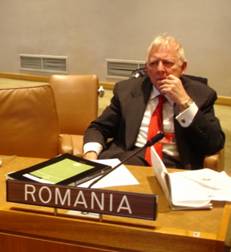
Dr.
Anthony DeLuca, International School for Mental Health Practitioners,
at meeting, “The Protection & Promotion of
Human Rights of Persons with
Mental
Disabilities, “ UN 12/08/05