|
Holy
Wisdom
|
|
|
|
H.E. Rev. Ambassador
Anthony J. DeLuca, Ph.D., United Nations Representative and Holy Wisdom
Advisor; Karen Lynn McGuckin, Assistant United Nations Representative
and Holy Wisdom Editor; Rev. Michael Verra, D.D., Assistant to United Nations
Representative. |
UNITED NATIONS AFFAIRS, SYRIAN ORTHODOX CHURCH IN
AMERICA 2295 Victory Boulevard, Staten Island, New York, 10314 |
|
|
This publication is disseminated to the entire
membership of the Church throughout the world on a monthly basis.
Please bring this information to the attention of your parishioners and all
those under your care. The Earth is holy and a manifestation of
God. Pray for peace and the United Nations. |
|
|
|
Volumn XIII No 9 |
September 2004 |
|
|
UNICEF moves to protect Darfur's children from sexual
violence
Amid reports of violence
against women and children, UNICEF trains police to investigate rape. DARFUR/NEW
YORK, 26 July 2004 – Fifteen-year-old Amna Mohammed’s story is disturbingly
commonplace in Darfur and Chad: “The Janjaweed took all the property from our
village and they burnt it and the other villages nearby,” she says, speaking
quietly. “Many children were taken away and a lot of girls were raped.”
More than 1.2 million Darfurians are
vulnerable, surviving with difficulty in the dry, hostile landscape of Darfur
and Eastern Chad. They have been forced to flee their homes after a campaign
to drive them from their villages through terror and violence. But for
Darfur’s women and children there is a second dimension to this ordeal. As
they swept across Darfur, militia groups raped and sexually assaulted large
numbers of women and girls. The assaults have continued around the
camps where many of Darfur’s displaced are now living, as women have
attempted to leave to collect water and firewood. “Rape, sexual violence, fear of violence, are
all pervasive in the Darfur area, certainly among the women and girls
that I talked to. There’s a great deal of fear,” says UNICEF’s Executive
Director Carol Bellamy. Ms. Bellamy recently visited Darfur where she
heard countless testimonies from children and women. Their stories are both
consistent and shocking, almost always including rape and sexual violence,
villages burned, parents killed and entire communities forced to flee their
homes. “Too many people assume that rape and sexual
violence is inevitable in war. But frankly, from UNICEF’s perspective, it is
something that is growing,” Ms. Bellamy says. “It’s growing because
increasingly the victims in war today are civilians, largely women and
children. So the tactics being used in conflict are tactics of the
worst kind of abuse, the worst kind of violence and focused very often on the
most vulnerable. So we are seeing more sexual violence, more
rape. And it has to stop.” The rape of women and children has a devastating
impact on individuals and entire communities. For many girls and women,
sexual violence is the culmination of a series of assaults. They have
often lost all the things that protect them: Family members have been killed
before their eyes with complete impunity, siblings and mothers raped and
entire families forced to flee their homes.
Sydney, Australia has a great climate, but for Kobe
Lee Challis, Martin Proctor and their classmates at Melrose Park Primary
School, playing in the sun without protection is a risky game. |
Flood crisis in India
DHAKA/NEW YORK, 28 July 2004 – Overflowing sewers mixing with floodwaters are putting the health of millions of children at risk in Bangladesh’s capital city of Dhaka. “In urban areas, poor areas, the situation for
children is extremely dangerous. The water in the cities is filled with filth
and the children who are playing and walking through the water are vulnerable.
They are easy prey to infectious diseases,” said UNICEF Bangladesh Chief of
Communications Naseem-Ur Rehman in a phone interview this morning. The sewer water is gushing out of manholes in many
areas of the city, which has a population of more than 10 million people.
Diseases like diarrhoea, watery dysentery, acute respiratory infection (ARI),
jaundice, typhoid and scabies are being reported. Acute respiratory infection
is one of the single largest killers of children annually in Bangladesh, said
Mr. Rehman. The presence of the black, foul-smelling water
suggests that the worst of the problem is yet to come. As the dank floodwater
stagnates, children face an increasing risk of disease. More than one-third of Dhaka is inundated. All roads
in Motijheel, the commercial hub of the country, are submerged; anyone
wishing to go to the central bank must wade through thigh-deep water. Fifty-one of Dhaka’s 90 wards have been affected by
the flood. So far, 206 flood shelters have been opened in the city, in which
more than 200,000 people have taken shelter. There are nearly 5,000 flood
shelters open in the rest of the country. Since last weekend, 15,263 schools
have been affected by the flood and 14,932 schools have been closed.
Currently, 1,571 schools have been converted into temporary flood shelters. Floods claim children’s lives across the country “The
situation here is grave,” said Mr. Rehman. “There are an
increasing amount of people in the shelter homes, and there is a lot of
anxiety there, especially among the children.” MAGARITA WORK IS JUST BEGINING
Andrea
is in a New Field Deep in the highlands of Guatemala in the small village of
Pixabaj, Andres Julaju Cojtin has begun a new life as a farmer. After 15
years of fighting on the side of the guerilla movement known as the Unidad
Revolucionaria Nacional Guatelmalteca (URNG), Andres is benefiting from an
income-generating project for former combatants. |
|
|
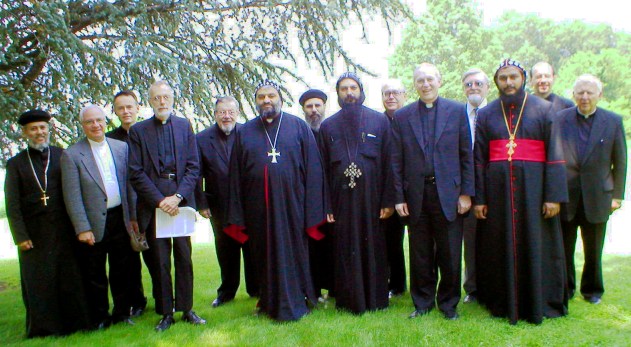
WASHINGTON--Evangelization
was the main topic of this year’s session of the Oriental Orthodox-Roman
Catholic Theological Consultation. The meeting took place on June 7 and
8 at the Passionist Spiritual Center in Bronx, New York, under the
co-chairmanship of Bishop Howard Hubbard of Albany and Very Rev. Chorbishop
John Meno of the Syriac Orthodox Church of Antioch
|
|
|
|
United Nations Department of Public
Information 57th
Annual DPI/NGO Conference
“Millennium Development Goals: Civil Society Takes Action” 8 to 10 September 2004 United
Nations Headquarters New York Civil society activists from around the world are preparing to mobilize broader public support for a major United Nations initiative, the Millennium Development Goals. The 57th Annual Conference of Non-Governmental Organizations (NGOs), entitled Millennium Development Goals: Civil Society Takes Action, will take place at United Nations Headquarters in New York from 8 to 10 September 2004. Organized by the United Nations Department of Public Information (DPI) in partnership with the NGO/DPI Executive Committee, the Conference is the premier NGO event held at the United Nations each year. “This Conference aims to raise public awareness and support for the Millennium Development Goals through the 3,000 NGOs working directly with the UN Secretariat” says Shashi Tharoor, Under-Secretary-General for Communications and Public Information of the United Nations, “The involvement of civil society partners in the MDG Campaign is essential to its success.” At
the Millennium Summit in 2000, 189 Member States adopted a Declaration that
synthesized the priorities of the international agenda and reflected the
commitments that had been painstakingly negotiated during the previous decade
of world conferences. The Millennium
Declaration, and the eight goals it identified, have become a road map for
tackling poverty, instability, HIV/AIDS, gender inequality and violence in
virtually all parts of the world. In addition to five plenary
panels and 30 Midday NGO Interactive Workshops, the Conference will feature
speakers such as Eveline Herfkins, Executive Coordinator, United
Nations Millennium Development Goals Campaign, Jeffrey Sachs, Special
Advisor to the Secretary-General on the Millennium Development Goals, Mark
Malloch Brown, Administrator of the United Nations Development Programme
(UNDP), Kavita Ramdas, President of the Global Fund for Women, Jacques
Attali, Founder and President of PlaNet Finance, Ryokichi Hirono, Senior Adviser of the Japan Council on the United Nations Decade of
Education for Sustainable Development and Bineta Diop, Founder and
Executive Director of Femmes Africa Solidarité , among others. |
|
|
|
Syrian Orthodox Bishop SOLNews (27.7.2004) – This very evening the
Syrian orthodox Bishop Mor Severius Saliba Tuma passed away at 5 pm at the
age of 35 in Zahle, Lebanon. Mor Severius Saliba suffered from a fatal brain
tumor. The funeral will be held at the St. George Church on 29th at 5 pm. Mor Severius Saliba Tuma was
born in the city of Kamishli, Syria, on November 21, 1969. He followed
his theological education at the Patriarchal Seminary in Damascus. In
1989, he became a monk and in 1992 he was ordained a priest. From 1994 to
1998, he visited the Oriental Institute in Rome, studying for his Doctorate.
On 14th May 2000, he was ordained as a Metropolitan by the Syrian orthodox
Patriarch Mor Ignatius Zakka I Iwas at the Sts. Peter & Paul Cathedral in
Saydnaya, Damascus, for the new diocese of Zahle in Lebanon. The young
prelate could serve his flock for only four years as a Bishop. Source:http://www.suryoyo-online.org/news/severiussalibatod.htm June 17, 2004. Senior Metropolitan of the
Syrian Orthodox Church in India, Mor Osthatheos Binyamin Joseph (55), died of cardiac arrest at a private hospital near his
home town on Thursday morning (17th June). He collapsed while the doctors
were examining him. The Metropolitan had been admitted to the hospital on
June 14 following a severe stroke. FROM: William Ryan, United Nations Representive EVANGELIZATION WAS MAIN TOPIC OF THIS YEAR’S SESSION OF ORIENTAL ORTHODOX-ROMAN CATHOLIC THEOLOGICAL CONSULTATION WASHINGTON--Evangelization was the main topic of this year’s session of the Oriental Orthodox-Roman Catholic Theological Consultation. The meeting took place on June 7 and 8 at the Passionist Spiritual Center in Bronx, New York, under the co-chairmanship of Bishop Howard Hubbard of Albany and Very Rev. Chorbishop John Meno of the Syriac Orthodox Church of Antioch. From an Oriental Orthodox perspective, Fr. Athanasius Farag spoke on the theology of evangelization in the Coptic Orthodox Church. He described four aspects of the mission of the Coptic Church in the United States. First, there is a need to provide spiritual care for first generation Copts who have come to this country from Egypt. Second, there is a need to communicate the spiritual life to children, often in areas where there are few if any other Copts to provide them with support. Third, there is a need to reach out to other Christians in the country, and to preach to non-believers. The Coptic Orthodox Church senses a strong spiritual hunger among many Americans and seeks to meet this need through proclamation and personal witness. The Coptic Church tries to make its own historical heritage available to more Americans by providing English translations of Coptic patristic and contemporary sources. A basic overview of the Catholic understanding of evangelization was provided by Rev. Frank DeSiano, CSP. Father DeSiano is former President of the Paulist Fathers, present pastor of Old St. Mary's parish in downtown Chicago, consultant to the United States Conference of Catholic Bishops’ Committee on Evangelization, and the principal writer of Go and Make Disciples: A National Plan and Strategy for Catholic Evangelization in the United States, adopted by the Bishops in 1992. In a second presentation Fr DeSiano provided a summary of Go and Make Disciples, and focused on the three goals of evangelization that are identified in the document. He also spoke about parish evangelization strategies in a third presentation, geared to help parishes reach out beyond themselves to evangelize the unchurched and inactive. The Catholic and Coptic presentations at the meeting were followed by lively discussions regarding the best ways to witness to Christian faith in an increasingly secular society. The dialogue also held a session devoted to an examination of major events in the lives of the churches. Topics discussed included the dialogue between the Catholic Church and the Oriental Orthodox Churches in India, an update on the way the U.S. Catholic Bishops have responded to the clerical sexual abuse scandal, the new agreed statement on the filioque released by the North American Orthodox-Catholic Theological Consultation, a new patriarch of the Eritrean Orthodox Church, the visit of a delegation of U.S. Catholic Bishops to Armenia in the summer of 2003, current issues concerning the reception of communion by pro-choice Catholic politicians, the first session of the Catholic Church-Oriental Orthodox Churches International Joint Commission for Dialogue, the installation of a new Malankara Orthodox Metropolitan in North America, the “Christian Churches Together” initiative, and the present situation of the Coptic, Ethiopian, and Syriac Orthodox Churches. The members also reviewed reactions to the document Reflections on Covenant and Mission that was issued by representatives of The National Council of Synagogues and the Catholic Bishops’ Committee for Ecumenical and Interreligious Affairs on August 12, 2002. The members of the Consultation were particularly pleased to welcome Archbishop Mor Titus Yeldho Pathickal, of the Malankara Archdiocese of the Syrian Orthodox Church in North America, who attended for the first time since his recent installation as metropolitan. The next meeting is
scheduled to take place on June 9-10, 2005, at St Nersess Armenian Seminary
in New Rochelle, New York. It will
focus on developing closer relations among our
churches, and on the position of the Catholic Church regarding proselytism
among the Oriental Orthodox faithful. The United States Oriental
Orthodox-Roman Catholic Consultation was established in 1978, and is
sponsored jointly by the Bishops’ Committee for Ecumenical and Interreligious
Affairs of the USCCB and the Standing Conference of Oriental Orthodox
Churches in America. In 1995 it published “Oriental Orthodox-Roman Catholic
Interchurch Marriages and Other Pastoral Relationships,” which includes
pastoral guidelines for marriages involving the faithful of the two
communions as well as ample documentation about the development of our
ecumenical relationship in recent decades. In 1999 it issued "Guidelines
Concerning the Pastoral Care of Oriental Orthodox Students in Catholic
Schools |
|
|
|
Highlights of the Noon Briefing BY STEPHANE DUJARRIC UN
HEADQUARTERS, NEW YORK Tuesday,
August 31, 2004 UNITED NATIONS CONDEMNS TERRORIST ATTACK IN ISRAEL
SUDAN: SEARCH AND RESCUE UNDERWAY FOR MISSING U.N. STAFF IN DARFUR
SUDANESE PARTIES DISCUSS HUMANITARIAN ISSUES
UNITED NATIONS
INVITED TO ATTEND AL THAWRA CITY
UNESCO URGES RELEASE OF FRENCH HOSTAGES IN IRAQ
SECURITY COUNCIL BRIEFED ON BURUNDI ON LAST DAY OF RUSSIAN PRESIDENCY
NUMBER OF ASYLUM SEEKERS IN INDUSTRIALIZED COUNTRIES FALLS
DONORS URGED NOT TO FORGET BANGLADESH FLOOD VICTIMS
MOROCCO'S GOLD MEDALLIST TO HELP CHILD DEVELOPMENT CAMPAIGN
OTHER ANNOUNCEMENTS REFUGEE AGENCY IN PACT TO HELP RETURN 10,000 CONGOLESE REFUGEES: The Office of the UN High Commissioner for Refugees (UNHCR) has reached an agreement with the Democratic Republic of Congo (DRC) and the Central African Republic (CAR) that will pave the way for the return of some 10,000 Congolese refugees. The tripartite agreement, signed last Thursday in Kinshasa, will provide a legal framework for the voluntary repatriation of refugees who fled the fighting in DRC's northwestern province of Equateur between 1998 and 2002. WOMEN AND ADOLESCENTS NEEDED FOR HIV VACCINE TRIALS: A meeting organized by UNAIDS and the World Health Organization stressed the need for greater participation of women and adolescents in HIV vaccine clinical trials. Experts at the meeting, which took place over the weekend in Lausanne, Switzerland, said that women exposed to HIV are at least twice as likely to become infected with the virus as their male counterparts. AIDS also places young people at high risk, with about half of the new HIV infections in the developing world affecting people between the ages of 15 and 24. LATEST ISSUE OF U.N. ENVIRONMENT PROGRAMME MAGAZINE RELEASED: The United Nations Environment Programme announced today the publication of the latest issue of their magazine, called Our Planet. This issue examines the role of women throughout the developing world in the use and care of the environment. JAPAN DONATES $2 MILLION TO HELP GET CHILDREN OUT OF ORPHANAGES: The Government of Japan is donating more than $2 million to UNICEF to get children out of orphanages and other institutions across Central Asia. The funds will go to the UNICEF supported-project “Every Child Has a Right to Grow up in a Family Environment" and benefit around 32,000 children, plus 30,000 families that are at risk of institutionalising their children. The funds will be divided between Kazakhstan, the Kyrgyz Republic, Tajikistan, Turkmenistan and Uzbekistan. Office
of the Spokesman for the Secretary-General |
|
|






WCC calls for peacekeepers and war crimes probe in
Sudan
Geneva (ENI). The World Council of Churches has called
for an international peacekeeping force and the investigation of war crimes in
Sudan's troubled Darfur region, where up to 50 000 people are reported to have
died in 18 months of violence blamed on pro-government militia. "The
ethnic cleansing which has taken place in Darfur must be reversed before it
takes on the proportions of genocide," said WCC director of international
affairs, Peter Weiderud. The mainly Arab pro-government militia have been
accused of killing tens of thousands of black Africans and pushing more than a
million people from their homes in the crisis in Darfur in western Sudan. [374
words, ENI-04-0561]
Indian church council rejects army's special powers in
troubled Manipur
New Delhi (ENI). The National Council of Churches in
India (NCCI) has backed a demand for the scrapping of a law granting sweeping
powers to security forces in troubled Manipur state in north-eastern India.
Protests against the law in Manipur have increased since mid-July when a woman
was allegedly raped and killed by troops who said she was thought to be helping
separatists. The woman had been detained under the Armed Forces Special Powers
Act, which gives security forces wide-ranging powers, and which the armed
forces say is necessary to help fight militants. [296 words, ENI-04-0563]
Pope's return of Russian icon raises hopes of detente
with Orthodox
Warsaw (ENI). Russian Orthodox church leaders have
welcomed Pope John Paul II's decision to return a precious icon to Russia, to
be handed over in Moscow on Saturday by a Roman Catholic delegation. The icon,
"Our Lady of Kazan", is due to be returned at a ceremony in the
Kremlin's Dormition cathedral, which President Vladimir Putin is scheduled to
attend. Archbishop Tadeusz Kondrusiewicz, the head of Russia's Roman Catholic
minority, said he hoped the gesture would improve relations between the
Orthodox and Roman Catholic churches which have been strained in recent years.
[405 words, ENI-04-0562]
ENI News Highlights contain summaries of ENI articles
published today.
This summary may be copied or re-posted provided the
information printed below is retained.
Individual paragraphs may be reproduced provided ENI
is acknowledged as the source.
For details of subscriptions to the full ENI News
Service, which contains full text articles, contact ENI at the address below.
Ecumenical News International
PO Box 2100
CH - 1211 Geneva 2
Switzerland
Tel: (41-22) 791 6088/6111
Fax: (41-22) 788 7244
Email: eni@eni.ch
Security Council unanimously renews UN mission in Iraq for another year
|
|
|
Security Council |

12
August 2004 – The Security Council
today unanimously renewed for a further year the United Nations Assistance
Mission for Iraq (UNAMI),
whose tasks include coordinating various humanitarian operations and helping
the war-torn country to organize elections by the end of January and draft a
new constitution.
Reaffirming
that the UN should play a leading role in assisting the Iraqi people and
government in the formation of institutions for representative government, the
15-member body said in a resolution
that it would review UNAMI’s mandate in 12 months or sooner if requested by the
Iraqi Government.
The
mission was initially established for a 12-month period by Security Council resolution
1500 of 14 August 2003, when Secretary-General Kofi Annan called for it to
have a staff of over 300, both international and local.
Last month Mr. Annan named Pakistan's Ambassador to the United States, Ashraf Jehangir Qazi, as his Special Representative for Iraq. Mr. Qazi is expected to make his first visit to the country some time this month, but in his latest report on the situation Mr. Annan last week stressed that staff security remained the overriding constraint for all UN operations in Iraq.
With
the risk to UN personnel in Iraq categorized as "high to critical,"
UNAMI and UN agencies will continue to limit their activities inside Iraq to
essential tasks, the report said.
UN envoy says Sudan has failed to disarm militias and stop attacks in Darfur
|
|
|
Jan Pronk, UN envoy
for Sudan |

2
September 2004 – The Sudanese
Government has not disarmed the notorious Janjaweed militias nor stopped their
brutal attacks against civilians in the war-torn Darfur region, the senior UN
envoy to Sudan told the Security Council today in a meeting
assessing what steps Khartoum has taken to restore security to Darfur.
Jan
Pronk, the Secretary-General's Special Representative for Sudan,
called for the mission of African Union (AU) monitors in Darfur to be expanded
in size and mandate to better protect the region's vast population of
internally displaced persons (IDPs).
He
praised Khartoum for making some progress since the Security Council imposed a
30-day deadline on 30 July, citing the end of Government military attacks in
areas with high numbers of IDPs, the deployment of extra police, the removal of
restrictions on humanitarian relief and the start of negotiations with Darfur’s
two rebel groups.
But
Mr. Pronk said Khartoum had failed in two key areas to meet the commitments it
made in a joint communiqué
with the UN in early July: it has not stopped attacks by militias against
civilians and it has not disarmed the militias.
While
he welcomed the reining in of part of the Popular Defence Force as “a laudable
step,” most militias, especially the notorious Government-allied Janjaweed,
have not been disarmed.
Mr.
Pronk also said no serious steps have been made to identify any of the militia
leaders or bring them to justice, “allowing violations of human rights to
continue in a climate of impunity.”
Some
1.2 million IDPs live in at least 139 sites around Darfur, an impoverished
region in western Sudan that is equivalent in size to France. Another 200,000
refugees have fled to neighbouring Chad.
Many
of the IDPs and refugees have told UN agencies that left their home villages
because of deadly attacks by the Janjaweed and Government forces, which have
been fighting an armed rebellion in Darfur since February last year.
Mr.
Pronk said in his address that the humanitarian situation remains bleak and
while there have been no major outbreaks of infectious disease, malnutrition
and mortality “is still high, too high.”
Many
IDPs are also out of reach of relief workers because of the remoteness of the
region, and some areas lack access to food, water and sanitation.
The
Council is meeting today to discuss what kind of progress Khartoum has made in
implementing its pledges to restore security and end the violence in Darfur.
On 30
July, in Resolution
1556, the Council stated it may take action under Article 41 of the UN
Charter if Sudan has not taken steps to meet those promises. Article 41
measures include unspecified economic penalties and the severing of diplomatic
relations.
Meanwhile,
Ambassador Juan Antonio Yáñez-Barnuevo of Spain, which holds this month’s
rotating Council presidency, told a press briefing that the situation in Sudan,
Africa’s Great Lakes region and Iraq would be among the major issues
confronting the Council this month.
Ambassador
Yáñez-Barnuevo said the Council hoped to wind down its workload by the middle
of the month to allow for the annual session opening of the General Assembly.
Without offers of protection, Annan warns that UN workers in Iraq remain in peril
|
|
|
|

9
September 2004 – International staff
working for the United Nations in Iraq are "operating at the outer limit
of acceptable and prudent risk," Secretary-General Kofi Annan says in a
new report
which warns that the UN presence on the ground there is limited because of
insecurity until further notice.
While
pledging to "do everything possible, as circumstances permit, to support
Iraqi efforts in the political and economic reconstruction of their
country," the Secretary-General points out that no country has yet
committed to providing any security staff for UN workers there.
UN
spokesman Fred Eckhard told reporters today that the world body has conducted
"an exhausting and exhaustive search" for security units, adding that
there have been "some promising leads."
The
UN Assistance Mission in Iraq (UNAMI) needs four personal security details,
each comprising 12 officers, to protect the Secretary-General's Special
Representative for Iraq, Ashraf Qazi, other designated UNAMI officials and
visitors as they travel around the country.
Three
armed guard units, each consisting of 160 people, are required to protect UNAMI
facilities, while forces are also needed to help UN staff working outside the
so-called "international zone" in Baghdad.
The
UN has restricted the number of its foreign staff in Iraq
to 35 until there is "a qualitative improvement in the overall security
environment," Mr. Annan says.
Just
over a year ago, the UN suffered a devastating terrorist attack which killed 22
people at its Baghdad headquarters. And the new report notes that the last few
months have been marked by continuing violent attacks, including assassinations
and kidnappings, with many targeting foreign workers. Armed militias are still
active and are connected to politically influential parties and individuals.
The
volatile security situation is also playing havoc with Iraqis' confidence in
their political future, especially the electoral process as it heads towards
polls scheduled for January next year.
Mr.
Annan says the only solution to the insecurity and violence is a political
process that is not based on threats or armed force, but instead a genuine
willingness to tackle political, economic, social and cultural grievances
peacefully.
He
gives prime responsibility for this to Iraq's Interim Government, arguing it
must be as inclusive as possible as it shapes the political process ahead of
the scheduled elections.
"Ultimately,
the people of Iraq must be continually reassured and convinced that the process
is unequivocally moving towards the goal of making them the masters of their
own political future."
Mr.
Annan stresses the importance of establishing the rule of law as paramount in
Iraq and calls for reform of the country's police, judicial and penal systems.
He also calls on political parties to avoid moves which could inflame tensions.
|
|
|
|
|
|
|

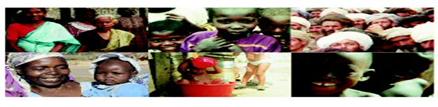
At least 25 million people spread over 52
countries are displaced by violence and persecution but remain within the
borders of their own countries. While the primary responsibility for protecting
and assisting IDPs rests with States, the scope and complexity of this
contemporary phenomenon requires the concerted action of a wide range of
humanitarian, development and political actors.
Pursuant to a
decision of the Secretary General, the Internal Displacement Unit was established
within the Office for Coordination of Humanitarian Affairs (OCHA). The Unit is
directed by Mr. Kofi Asomani, and consists of international staff seconded by
the UNDP, UNHCR, WFP, OCHA, UNICEF, IOM, NGO community and the RSG on IDPs. Its
establishment was preceded by extensive consultations amongst members of the
Inter-Agency Standing Committee (IASC) and Senior Network on Internal
Displacement.
(About Us)
The main
objective of the Unit is to promote system wide improvements in the response to
the needs of the internally displaced people (IDPs) as well as to provide
targeted support to specific country situations. Main areas of work focus on
protection of IDPs, field support, capacity building/ training and advocacy/
public information.
In achieving
these objectives, the Unit assists the ERC in discharging his function to
coordinate an effective response to the needs of the internally displaced
people (IDPs) worldwide. The Unit supports field response in IDP crises as
implemented by IASC members and OCHA under the leadership of Resident and
Humanitarian Coordinators, in the context of an inter- agency collaborative
approach.
(Partners)
Humanitarian Impact of Sanctions
|
|
|