Since
February 2005, the Post Tsunami Mental Health Outreach Program (MHOP) under the
Association of Disaster and Mass Trauma led by Dr. Anie Kalayjian,
has sent six teams of mental health professionals to provide psychological aide
to tsunami survivors in Batticaloa, Sri
Lanka.
With appreciation to
Psychology Reporter at http://internationalpsychology.net
The teams
have provided counseling using Dr. Kalayjian's Six Step Bio-psychosocial and
Spiritual method and have targeted shelters, schools, and camps in areas with
the greatest need such as Navalady, Zahira, and the Central
Methodist College. To aid these survivors with their trauma,
MHOP mental health professionals conduct various group therapy sessions with
adults, individuals, married couples, and children.
Survivors
are reporting fear of the wind, thunder, and lightning as it reminds them of
the tsunami. As a result, students are
still not attending school, older people are ready to die in case another
tsunami comes, and people are ready to flee if needed and stay indoors for
protection in case it rains.
During a
female group session, Monica Porter from Team V shared how one day the women
were concerned about the fishermen who had been out in the ocean earlier that
day, but returned as soon as the waves picked up. This news quickly spread fear among the
women. One woman whose son was still out
and had not returned became so upset that during the group session she began to
cry and fainted.
Tom Skurky
from Team II reports that the male groups have also expressed intense anxiety
and grief. Many of these men have lost
their wives and are coping with how to raise a family without a woman in the
home. The Tamil family places almost the
entire burden of housekeeping and child rearing on the woman. Thus, these men are uniquely ill equipped for
their new roles in the family. The men
were encouraged to
seek out help for meals, cooking and childrearing as well as
other housekeeping tasks. It was
advocated that the mutual support provided in the group process be extended to
their functioning in the camp community. In addition to group sessions,
discussion
Groups were composed consisting of
approximately fifty men
during which they brainstormed and
 With
appreciation to
With
appreciation to
http://www.unet.univie.ac.at/~a9606407/flutkatastrophesuedostasien/seebebenopferlinks.htm
problem-solved issues related to the future placement and
employment of the Navalady village people.
With appreciation to www.unescap.org/esid/tsunami
Mr. Skurky
says “The mental health teams are a crucial element in
the recovery process of the tsunami survivors”.
These people were already psychologically vulnerable from years of civil
war. Dr. Anie Kalayjian will return to
Sri in July and conduct an evaluation and follow-up of the trainings provided
in the past months.
MHOP is
grateful to all the individuals who have volunteered and the UNITED SIKHS for
their generous support.
With
appreciation to International Psychology Reporter, Tsunami Update, Spring, 2005 at http://www.internationalpsychology.net
UN
Rushes Aid for at Least 34,000 People Left Homeless by Indonesian Quake
1 April –
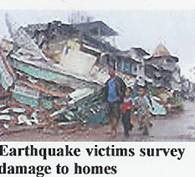
At least 34,000 people have been left homeless by the earthquake that struck
off northwest Indonesia
on Monday, with the number expected to rise, and as relief supplies start
arriving in large quantities medicine and medical equipment become high
priorities following damage to hospitals, United Nations relief officials said
today.
Up to
20,0000 people are believed to have lost their homes in the south of Nias
Island, off Sumatra, where it is estimated that 25 percent to 30 percent of
structures have been damaged or destroyed, UN Office for the Coordination of
Humanitarian Affairs (OCHA) spokesperson Elizabeth Byrs told a news briefing in
Geneva. Latest reports put the death
toll there at 600.
On
neighboring Simeulue Island
about 80 percent of the buildings have been damaged, some villages had been
completely destroyed, and the original estimate of 12,000 people displaced from
their homes in the capital city of Sinabang
is likely to rise, she said. Another
2,000 homeless have so far been reported from Singkil district on the Sumatran
mainland, with the number likely to increase.
Ms. Byrs
said that in view of the fact that ht hospital in Simeulue was 40 percent
damaged and the one on Nias completely destroyed, medicine and medical
equipment were of his priority, along with water purification systems and have
machinery to remove the debris from the buildings that had been damaged.
Aid
materials are arriving in large quantities, but movement of goods to Nias has
been delayed by an airplane which slipped off the end of the runway in Sibolga,
the logistics hub on Sumatra for the island.
A UN World
Food Programme (WFP) boat arrived today in Nias with 300 tons of aid, enough to
feed 20,000 people for a month, with distribution set to begin this
weekend. But challenges still lie ahead
in delivering it to people outside the urban areas due to narrow, severely
damaged roads.
WFP
helicopters have also undertaken 156 medical evacuations from Nias to the
hospital in Sibolga, and are now able to focus to a greater extend on bringing
food to Simeulue.
OCHA is
deploying a team to Simeulue to assess how best to coordinate efforts following
the arrival of 620 tons of non-food items from non-governmental organizations
(NGOs) Water purification systems are expected and a ship has already arrived
with five bulldozers.
For its
part, the UN Population Fund (UNFPA) has sent supplies to help ensure the
health and hygiene of displaced people on Nias, particularly pregnant women,
including 1,400 personal hygiene kits and 150 clean home delivery kits. A team of doctors has been dispatched to Nias
to conduct a rapid needs assessment.
With appreciation to www.un.org/news
The region
posing the biggest access problem at the moment is Aingkil due to road damage
and air and sea links are, thus, urgently needed. OCHA is exploring the possibility of using
helicopters.
With
appreciation to UN Daily News, UN Rushes Aid for at Least 34,000 People Left
Homeless by Indonesian Quake, April
1, 2005 at www.un.org/news
Over
11,000 Togolese Seek Refuge in Benin
and Ghana
GENEVA
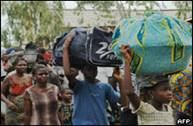
– April 30 – The number of Togolese fleeing general insecurity in the country
is steadily increasing, with more than 11,500 refugees having crossed over into
neighboring Benin
and Ghana by
Saturday. This was up from 7,000 on
Friday.
The
situation in Togo’s
capital Lome’ was reportedly calmer
on Saturday. But refugees continued to
cross into Benin
at the Hilakondji border point, with some 7,500 refugees arriving since
Tuesday. UNHCR and its partners have
already transferred 800 new arrivals to Come camp,
which is not at full capacity. The camp
is 80 kms from Benin’s
capital Cotonou. UNHCR expected to transfer 500 refugees to a
new camp at Lokossa later on Saturday.
The majority of the remaining refugees have sought shelter with
relatives in the region. Several hundred
others who have chosen to remain in the border area are staying in church
grounds and are receiving assistance from UNHCR’s partner, Caritas, and the
Benin Red Cross.
In Ghana,
refugee numbers climbed to over 4,000 by Saturday afternoon, from 628 on
Friday. A total of 1,131 people crossed
into Ghana on
Saturday at Aflao, which is very close to Lome’.
UNHCR’s
head of West Africa operations Michel Gaude’, said
although numbers had risen the situation was calm and the majority of Togolese had
been welcomed by their extended families and friendly communities.
“There was
a temporary increase in the number of arrivals through the border post of Aflao
after the border re-opened, but now border movements have nearly come back to
regular levels,” Gaude’ said Saturday.
“Many of the arrivals say they are concerned about the general situation
in Togo after
the elections, but that they hope to be able to return in the coming days, as
the situation returns to normal”
The U.N.
refugee agency has reinforced its registration and monitoring activities along Ghana’s
southern border with Togo
at Aflao, Kpoglo and Dzodze, in a joint operation with Ghana’s
Immigration Service and a local non-governmental organization, WISE. Two joint mobile registration and monitoring
teams are also watching the border from Dzodze northwards to Nyive, 15 km
northwest of Ho, the regional capital.
With appreciation to http://www.africanewssearch.com
A 10-truck
UNHCR convoy loaded with supplies for 5,000 people left the agency’s regional
warehouse in Ghana’s
capital, Accra, on Saturday
morning, bound for Benin
via Burkina Faso. The trucks are carrying tents, plastic
sheeting, blankets jerry cans, soap and other supplies. The journey is expected to take four days and
is taking the indirect route through Burkina
Faso because of security concerns in Togo. Earlier in April UNHCR pre-positioned
supplies for 2,500 people in Benin.
A
three-person UNHCR emergency team was heading to Benin
over the weekend to reinforce agency personnel already on the ground.
With
appreciation to UNHCR News, Over 11,000 Togolese Seek Refuge in Benin
and Ghana, April 30, 2005 at http://www.unhcr.ch/cgi-bin/texis/vtx/news/opendoc.htm?tbl-NEWS&id=4275cea82
Glaring
Inequalities for People With Mental Disorders
Addressed in New WHO Effort
20 June 2005 – Geneva
–Today the World Health Organization (WHO) is giving countries an important new
legal tool to help address the often unacceptable conditions in which people
with mental disabilities live.
There are
more than 450 million people with mental, neurological or behavioral problems
throughout the world. In many countries,
they are among the most vulberable and the least legally

With appreciation to www.whoindia.org
protected. Nearly a
quarter of all countries have no mental health legislation, while many more
have legislation that poorly protects the human rights of people with mental
disorders, or does not reflect currently accepted mental health practices.
For
example, in some communities, people with mental disorders are tied or chained
to trees or logs. Others are
incarcerated in prisons without have been accused of a crime. In many psychiatric institutions and
hospitals, patients face gross violations of their rights. People are restrained with metal shackles, confined
in cased beds, deprived of clothing, decent bedding, clean water, or proper
toilet facilities and are subject to abuse.
In
addition, people with mental disabilities often face social isolation and severe
stigmatization which results in additional human rights violations, including
discrimination in education, employment and housing. Some countries even prohibit people from
voting, marrying or having children.
WHO is
providing support to an increasing number of countries implementing progressive
mental health laws that respect, protect, and fulfill the rights of people with
mental disorders, with the aim or improving their lives and well-being. As part of this ongoing effort, today WHO
announces the publication of a landmark book which will guide countries and
support stakeholders in creating mental health legislation. The WHO Resource Book on Mental Health,
Human Rights and Legislation includes input from consultations with
hundreds of experts and stakeholders throughout the world, leaders in psychiatry,
psychology, law, and human rights as well as representatives from mental health
service users, family groups, and NGOs.
“We have a
moral and legal obligation to modernize mental health legislation. WHO is ready to help its Member States
fulfill this obligation with technical support and expert
advice.” Said Dr. LEE
Jong-Wook, Director-General of the World Health Organization.
The book
examines international human rights standards and shows how they apply to
people with mental disorders, addresses the ‘why’ and the ‘how-to’ of drafting,
adopting and implementation as well as linking legislation with mental health
policy. The book also includes a
‘step-by-step’ check reviewing existing legislation and developing new
laws.
The Resource
Book illustrates how a human rights approach to mental health law improves
the quality of psychiatric care and improves access. In Chile,
for example, recent measures to protect and promote the rights of people with
mental illness have resulted in investigation of abuses, changed therapeutic
practices, and improved access to treatment and rehabilitation.
WHO has
also established an international network of experts in mental health, law, and
human rights trained in the WHO framework for mental health legislation. Currently, WHO and network members are
offering technical advice and assistance to several countries throughout the
world. The network stands ready to
assist any country that wishes to modernize its mental health laws.
Dr.
Soumitra Pathare, a psychiatrist from India
is a contributor to the Resource Book.
She notes that “legislation can be an invaluable resource in
promoting the human rights of people with disorders throughout the world. Respect for rights and provision of quality
mental health services go hand in hand – you cannot have one without the
other. The WHO approach is flexible
enough to be of use in countries with vastly different historical, social, and
economic contexts.”
The
information contained in this Resource Book, together with the technical
expertise provided by the WHO and its network of experts are
important steps in moving towards universal human rights protection and access
to care for people with mental disorders.
 With
appreciation to www.who.int/mediacentre/news
With
appreciation to www.who.int/mediacentre/news
Mental
health issues will be the focus for WHO on Human
rights Day on 10 December 2005.
With
appreciation to Media Centre Glaring Inequalities for People with Mental
Disorders Addressed in New WHO Effort, June 20, 2005 at http://www.who.int/mediacentre/news/notes/2005/np14/en/index.html
OCHA
Condemns Attacks on Civilians in Nindja
Bukavu, May
31 – Innocent civilians have been once again caught up in the fighting between
armed groups in South Kivu, with 19 people killed and
may others wounded during an attack on the Collectivity of Nindja, 75k
north-west of Bukavu, South Kivu, last
Monday.
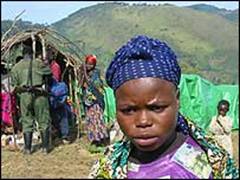
An
estimated 1,280 families, or 6,000 people, have now fled towards the village
of Ihembe, fearing further attacks.
“Once again
it is innocent civilians who suffer”, said Jean Marc Cordaro, OCHA’s Head of
Office in South Kivu.
“OCHA condemns all acts of violence against civilians. Such attacks must
cease immediately.”
 With
appreciation to http://news.bbc.co.uk/2hi/Africa
With
appreciation to http://news.bbc.co.uk/2hi/Africa
Amongst the
wounded were those who had limbs hacked off by machetes, with at least four
people reportedly still in critical condition.
Up to 50 more villagers have disappeared – carried off by the armed men
into the bush. Kidnapping of civilians
for ransom is common in the area, with more than 70
people abducted over the last six months. Of these, 18 have already been executed.
To add to
the list of horrors, over 200 women and girls have been raped in the wider
Walungu area since the beginning of the year, mostly by armed men.
“Humanitarian
access to the conflict area is severely limited, with local people reporting
that attacks are continuing”, said Mr. Cordaro.
“Life-saving aid could only be sent on Friday, when the security of the
convoy has been assured.”
 With
appreciation to http://news.bbc.co.uk/2hi/Africa
With
appreciation to http://news.bbc.co.uk/2hi/Africa
Rapid
Response focal point for south Kivu, the NGO International Rescue Committee,
sent a team to Nindja on Friday, May 27.
They took with them vital relief items supplied by UNICEF such as
blankets, plastic sheeting, soap and jerry cans for the displaced
population. High protein biscuits, known
as BP5, were also distributed. Latrines
are under construction in the makeshift camps where the displaced have
gathered.
The NGO
Malteser, already implementing humanitarian programs in the area, accompanied
the mission to determine what assistance could be provided in the health and
nutrition sectors. Malteser also
delivered mattresses for the displaced and restocked nutritional centers with
food rations.
“The
protection of the civilians against violence is a priority for humanitarians in
eastern DRC,” Mr. Cordaro continued.
“These attacks, and the ongoing harassment and abuse against civilians
in South Kivu must end.
We are doing everything we can to stop the atrocities.”
Nearly
50,000 people were displaced during fighting in the Territory
of Salungu that began in September,
2004. Many of these have only recently
returned home, following an improvement in security in the area. The Collectivity of Nindja is part of the Territory
of Kabare, which borders on
Walungu.
With
appreciation to United Nations OCHA, OCHA Condemns Attacks on Civilians in
Nindga, May 31, 2005
at http://ochaonline.un.org/webpage.asp?Page=2024