Bringing Psychology to the World
Winter,
2006 – Columbia University
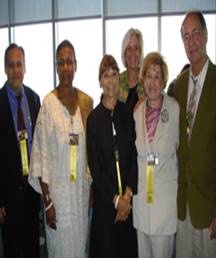
emeritus psychology professor Harold Cook, PhD, is living out a childhood
dream. As a child growing up in Booklyn, New York,
he would take class field trips to the United Nations.
With appreciation to http://webpage.pace.edu
“I was
really impressed with
all those buildings,” he says. “I didn’t
know much about the U.N., but I knew that it was a big place where important
things happen.
Now, as one
of APA’s U.N. representatives, Cook works to spread
the word to U.N. diplomats, staff, and others about the contributions that
psychology can make to many of the international humanitarian issues that the
United Nations addresses.

With appreciation to www.apasoc.com
APA is one
of more than 3,000 U.N.-affiliated nongoverernmental
organizations (NGOs) that work in committees to advise the U.N. on issues
ranging from aging to the environment to children’s rights. APA’s
representatives lead some of these committees.
Cook, for
example, is a co-chair of the Committee of the Family and is on the
Degree Studies at the United Nations
And Distance Learning
DeLuca@UN.int (718) 698-0700
www.IgnatiusU.com
Executive Committee of the Committee on Mental Health. Fordham
University psychologist Harold Takooshian, PhD, is vice-chair of the Human Settlements Cmmittee. Corann Okorodudu, PhD, a psychologist at Rowan
University in New
Jersey, co-chairs the Committee on Children’s
Rights. And former APA President
Florence Denmark PhD, who is also APA’s main U.N.
representative, chairs the committee on Aging.
APA’s newest representative is Hofstra University professor Deanna Chitayat,
PhD. Finally, University of Chicago
psychologist Neal Rubin, PhD, serves as APA’s
associate representative for special projects.
With appreciation to Monitor on Psychology. Bringing Psychology to the World, Winter, 2006 at www.apa.or/monitor
Child and Adolescent Mental Health
For the
past two years the Department has supported the development of a coordinated
child and adolescent mental health programme. The programme has
fostered a recognition throughout WHO and in the WHO
Regions that child and adolescent mental health is a necessary priority for the
healthy development of societies. Child
and adolescent mental health is central to the future development of low income
countries throughout the world, but in particular, in sub-Saharan Africa
and elsewhere where AIDS orphans, displaced populations of child combatants,
reintegrated child soldiers, AIDS affected and infected youth marginalized
because of lack of economic opportunity are jeopardizing the future of whole
nations. Furthermore, the free and
forced migration from Africa and other parts of the
world affected by conflict brings to the shores of the United
States and elsewhere youth who are unable to
integrate into society because of mental health problems. The economic and social consequences are
obvious and now well documented. WHO has
developed initiatives that will address these core problems at their origin and
provide programmatic support.
With appreciation to www.bpub.com/covers
WHO’s Department of Mental Health and Substance Abuse has
initiated three programmes which together form a
coordinated effort to address global interdependence of societies. The three programme
elements include 1) a
campaign on the stigma associated with mental illness among youth, 2) a global
policy initiative that will equip ministries of health to develop coordinated,
responsive programmes where child and adolescent
mental health will be integrated into overall health care, and 3) a programme to assess the global reatment
gap associated with mental illness. In
regard to all these programmes there is a keen
awareness that poor mental health on the part of youth leads to lack of
compliance with medical regimes, participation in work skills development, and
adds to the burden developing societies with increased participation and
instigation of violence, abuse of self and others, and support for a broad
range of illegal activities. The
activities related to identifying treatment resources and the policy initiative
parallel the original programmes addressing adult
mental health issues.
With
appreciation to WHO, Child and Adolescent
Mental Health, Winter, 2006 at www.who.int/mental_health/prevention/childado/en/index.html
UN Rights Expert Urges Iran Not to Execute Another
Juvenile
With appreciation to www.ncr.iran.org/images
New
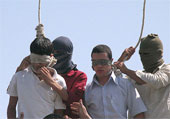
York, December 12 – After receiving numerous
allegations that juveniles have been executed in Iran
over the past year, a United Nations rights expert is calling on the country’s
Government not to carry out the death penalty against Rostam
Tajik, a 20-year-old Afghan national who was only 16 when he is alleged to have
committed murder.
“Executing
a juvenile offender is not the way to mark December 10, which is International
Human Rights Day,” Philip Alston, the Special Rapporteur
on extrajudicial, summary or arbitrary executions of the UN Commission on Human
Rights, said on Friday.
In January,
2004, Mr. Alston asked to visit Iran
on the basis of the standing invitation extended by the Government to experts
of the Commission on Human Rights. Since
that time the Government has regularly assured him that it will make the
necessary arrangements but nothing has happened
“It is now
urgent that the Government of Iran should arrange such a visit so that the
situation can be clarified,” Mr. Alston said.
With
appreciation to UN News, UN Rights Expert
Urges Iran Not to Execute Another
Juvenile, December, 2005 at www.un.org/news
UNICEF Calls on Zimbabweans to Speak Out
Against Child Abuse
New
York – January
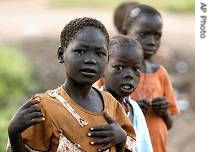
24, 2006 – In the wake of the accusations this week that a
headmaster in Zimbabwe
raped six primary school pupils, the United Nations Children’s Fund today
repeated its call for communities in the country to speak out against all forms
of child abuse.
With appreciation to www.voanew.com/english/images
“This is an
utterly intolerable violation of children’s rights,” said UNICEF’s
Representative in Zimbabwe,
Festo Kavishe. “At a time when Zimbabweans are making phonemental efforts to absorb more than 1 million orphans,
there appears a small number who prey on the most vulnerable of children.”
“Almost
every day there are fresh reports in the local media about children being
abused, sometimes at their schools, other times by family members, but mostly
by trusted authority figures”, Mr. Kavishe
added.
Anecdotal
evidence from local non-government organizations (NGOs) and clinics around Harare
show child sexual abuse is rampant. Last
year alone, a local NGO recorded 4,146 cases of sexual abuse against children
in its area of operation alone.
“Community
leaders need to be explicit in their condemnation of such abuse,” Mr. Kavishe said.
UNICEF, in
partnership with government ministries and several NGOs, supports a national
campaign called Zero Tolerance Against Child Abuse.
With appreciation to http://alibee.com/images/unicef2.jpg
As part of
the drive, UNICEF is backing training of trainers’ workshops and
community-based education. Participants
include government officials, NGOs, journalists, police, and teachers.
The
children’s agency is also stepping up its work with communities, seeking to
further educate them to spot the signs of child abuse and to tenaciously
protect their children by establishing and supporting functional child
protection committees, where children themselves are represented.
“Community
leaders, teachers, mums and dads – these people are the front line in the fight
against child abuse,” said UNICEF’s head of child protection, Jose Bergua.
“Silence on
this issue shelters the perpetrators and is a crime against children,” he
warned.
With
appreciation to UN News, UNICEF Calls on
Zimbabweans to Speak Out Against Child Abuse, January 24, 2006 at www.un.org/news
Actress Nicole Kidman Becomes Goodwill
Ambassador for UN Women’s Agency
New
York, January
26, 2006 – Award-winning screen actress Nicole Kidman was today
named as a Goodwill Ambassador to the United Nations Development Fund for women
(UNIFEM), which she pledges to support through travels to devastated countries
where its projects are carried out.
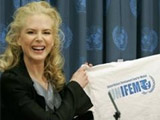
With appreciation to http://ctv.ca/archives/CTNews
Introducing
Ms. Kidman at a news conference in New York,
Executive Director Noeleen Heyzer
said, “We are honoured to have Nicole join the UNIFEM
family.”
Ms. Kidman
said she was “honoured” to become a Goodwill
Ambassador, adding she was not pretending to be an expert on any of the issues
that UNIFEM addresses, but she was looking forward to learning and lending her
support to “help make visible the very real and immediate problems.”
With
appreciation to UN News, Actress Nicole
Kidman Becomes Goodwill Ambassador for UN Women’s Agency, January 26, 2006 at www.un.org/news
The First Team of Post Earthquake Mental
Health Outreach Program Returns from Pakistan
On October 8, 2005, an earthquake with a
magnitude of 7.6 on the moment monitor scale struck the northeastern region of Pakistan. Entire villages and roads were buried by
landslides in the North-West Frontier Province and
Pakistan-administered Kashmir. The destruction of the earthquake was even
felt in India
and Afghanistan. Because of this horrific occurrence 150,000
lives were taken in Northern Pakistan alone, and still
more bodies are being discovered. According
to Action by Churches Together (ACT), an estimated 2.8 million will be homeless
and will suffer even more.
In
response, the Association for Disaster & Mass Trauma Studies, spearheaded
by Dr. Anie Kalayjian,
implemented its Mental Health Outreach Project in Northern Pakistan. The first team of the Montal
Health Outreach Project returned from Pakistan
on Tuesday, January 24, 2006. The team comprised of Dr. Anie
Kalayjian, Director of the program, and Nicole Moore,
from Fordham University, New York;
and Muhammed Hassan and iqbal Hassan field coordinators
from Pakistan.
Dr. Kalayjian and Ms. Moore were also invited to lecture at the
International Conference on “Earthquake 8/10: Social, Human, and Gender Issues,” taking place in Rawalpindi, Pakistan
from 15-17 of January 2006. Fatima
Jinnah Women
University, Rawalpindi, and the University of Azad Jammu & Kashmir, Mazzafarabad jointly organized this conference in
Collaboration with The Higher Education Commission, Islamabad.
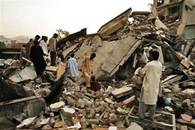
With appreciation to www.bu.edu.global/beat/jpg/pakistanquake.jpg
Dr. Kalayjian delivered a plenary address on the first day of
the conference. Her presentation was
entitled: “Earthquake 10/8: Human Issues.”
On the second day, Ms. Moore and Dr. Kalayjian
presented another lecture entitled: “Post Traumatic Mental Health Outreach
Program in SE Asia.”
While at the conference Dr. Kalayjian gave
interviews on the University Radio Station, as well as several newspapers
including, Online, Daily Times, and Jiang.
Dr. Kalayjian and Ms. Moore conducted several training sessions
and workshops. The first training
workshop was at the Fatima Jinnah Women
University for psychologists. The second one was at the Ayub Training
Medical Center,
and the third workshop was at the Ministry of Population and Welfare in Abbotabad. The team
conducted the initial assessment of the impact of the earthquake on the
surviving community. They visited
hospitals, refugee tent camps (where most of the survivors were sheltered),
homes, schools, and universities. Preliminary
findings revealed that over 75% had moderate to severe levels of Postraumatic Stress Disorder. Most frequently expressed feelings were fear
of repeated earthquakes, uncertainty regarding the future, nightmares,
flashbacks, hopelessness, hypervigilance, and somatic
complaints. As for living conditions,
survivors were staying in tents, the majority without heat, hot water, or
running water. The hygiene needs are not
being met, and respiratory infections, pneumonia, and scabies were spreading
rampantly.
As for
lessons learned, survivors frequently expressed that they learned to help
others, be more accepting of that which they cannot change, focus on the
moment, manage their feelings, gain more self-confidence, become more trusting
of God’s will and trust their abilities in coping. Those who interpreted the quake as a
punishment from God or “Allah”, were not able to identify a positive lesson at
first, but during the workshop they were able to express their guilt and work
through their emotions and beliefs to discover a positive lesson.
The team had
a press conference on the last day of their stay in Karachi,
Pakistan, where over
fifty newspaper reporters, radio, and TV reporters were present. “ 20 years ago, only
4,000 people will die from acute radiation and cancer, but many more suffer
from the lingering effects of poverty, and lack of information on how to live
in the contaminated areas and on how to regain their livelihoods, according to
a new United Nations report.
With
appreciation to Meaningful World, The First Team of Post
Earthquake Mental Health Outreach Program Returns From Pakistan, January 28, 2006 at www.meaningfulworld.com
Progress Made Against Sexual Exploitation But More to Do: UN Peacekeeping Head
February 23, 2006 – Meeting attended
by Ambassador DeLuca
“Signigicant progress” has been made in dealing with
incidences of sexual exploitation and abuse committed by United Nations
peacekeepers, but much more needs to be done, the Under-Secretary-General for
Peacekeeping said today, calling for more support from Member States.
With appreciation to www.un.org/Depts/dpko/peacekeepers
Jean-Marie Guenenno told the Security Council that the “severity of
the problem,” which came to the fore in 2004 with allegations against
peacekeepers in the Democratic Republic of the Congo (DCR), had been recognized
and the General Assembly had adopted a strategy to tackle it, focused on
prevention, enforcement, and ultimately on “remediation” for the victims.
With
appreciation to Un News, Progress Made Against Sexual Exploitation But More to Do: UN
Peacekeeping Head, February, 23, 2006 at www.un.org/news
Choreography Continues for Orphaned Girls
in Tajikistan
January 20 - Ten young
ballerinas with their smiling faces and pink point shoes gliding through their
newly-equipped dance studio, are gaining confidence and poise while providing
hope to their Dushanbe, Tajakistan school’s administration for a brighter future.
Six months
ago, an employee of Counterpart International I Il
Il
With appreciation to www.counterpart.org/dnn
volunteered to teach ballet to orphaned girls at Boarding
School-Internat #1,
offering them an opportunity to enjoy the beauty of dance. More than teaching just ballet techniques, Irina Wunder, a former dancer
herself, was also seeking to provide a creative outlet for the children living
in the school through exposure to an activity promoting self-esteem and
assurance. Following the debut
performance on the stage of Tajik Opera House in March, 2005, the young
ballerinas will now have an opportunity to continue developing their ballet
skills in their own newly-equipped room with dance barres
and mirrorsl.
Thanks to Counterpart, International, volunteers and supporters, the
school proudly opened the ballet room with a small ceremony on December 14, 2005.
Wunder, the Counterpart employee who initiated the program,
studied ballet in the former Soviet Union from 1979 to
1990 before directing a US State Department humanitarian assistance program
with Counterpart from 2003 until the summer of 2005. Currently stationed in Lima,
Peru, she serves as a
consultant for the organization. Her initiatives
target underprivileged youth and provide support to creatively promote social
and economic incentives through exposure to performing arts.
With
appreciation to Good News Agency, Choreography
Continues for Orphaned Girls in Tajakistan, January 20,
2006 at www.counterpart.org/dnn
Promoting the Rights of People with Mental
Disorders: Solutions in Countries
Ghana
– Mental health legislation can play a vital role in preventing violations and
discrimination against people with mental disorders. It can also support access to quality mental
health care and help people integrate into the community.
With Who
assistance, the Ghanaian Government has drafted a new mental health law. Ghana’s
previous law emphasized institutional care, which can lead to the serious
mistreatment of people with mental disorders.
The new law stresses access to in-patient and out-patient community
care, and promotes voluntary admission and informed consent to treatment. Once adopted, Ghana’s
new law will fight discrimination and stigmatizations, and help to protect the
human rights of people living with mental disorders.

With appreciation to www.ishamset.com/healnews/images/mental.jpg
Lesotho
– A mental health policy sets a vision and clear direction for improving mental
health in a population. A
well-articulated policy and action plan helps to reduce inefficiencies and
fragmentation in the health care system.
Lesotho
is developing a mental health policy and plan with the support of WHO. Lesotho’s
vision for 2020 is a high standard of mental health for all people, maintained
through accessible services that uphold and protect the human rights of people
with mental disorders. Specific
objectives include a move towards a system of community-based care, integrating
mental health services into general care, and a reduction in the number of
people treated for mental disorders in institutions and correctional services. The national policy emphasizes the need to
provide adequate mental health care and support to people with ‘physical’
disease including those living with HIV/AIDS.
Mongolia
– In Mongolia,
WHO is supporting the integration of mental health care into primary health care. Psychiatrists
and general practitioners throughout the country have been trained to provide
mental health care to people in the community.
Day-care centres have been established where people with mental
disorders receive psychological, social, and occupational rehabilitation. They are able to participate in meaningful
and fulfilling work while receiving treatment.
With appreciation to www.nqica/images/ik/ProductEnt83.jpg
‘Gers’ (a form of tent that is home to many Mongolians) are
used for people with mental disorders as an alternative to living in a mental
health institution. The gers provide sheltered accommodation as well as greater
autonomy and freedom. People living in gers are engaged in day-to-day activities such as herding
horses, milking cows, fuel gathering, gardening, carpentry, and embroidery.
Namibia
– On October 28, 2005, Namibia,
launched their first mental health policy.
With the assistance of WHO, the government will be implementing this
policy through the strategies and interventions identified within their
five-year action action plan. Namibia’s
policy provides a strong framework for the delivery of mental health services
and articulates the role and responsibilities of the different stakeholders
involved in the promotion and protection of mental health. The key challenge in implementing the policy will be
the need to change the attitudes of individuals, families, health professionals
and the general public. Namibia
plans to give people the knowledge needed to deal with mental and neurological
conditions through training and education.
Other
priority strategies include the integration of the mental health services with
existing health services, and the development of a network of services and
referral systems to help people with mental disorders access the treatment they
need.
Sri
Lanka – WHO is working with the Sri Lankan
Government to establish high-quality community care. Specialized mental health day-care centres – located in communities – offer another way for
people with mental disorders to access the care they need. Projects to reintegrate people back into the
community from psychiatric hospitals involve programmes
of support which can include help to find employment. As a result, some people previously living in
mental health institutions are now able to find jobs, save money and even buy a
house and support their family. In this
way, rehabilitation within the community can improve both the quality of life
and future prospects not only for individual people but for their families as
well. The ability to earn money and be eeen as a useful member of society is extremely important.
With
appreciation to WHO, Promoting the Rights of People with Mental Disorders: Solutions in Countries,
January, 2006 at http://wwwlive.who.ch/features
February 2 in the Security County: Topic Iran and Nuclear Weopons
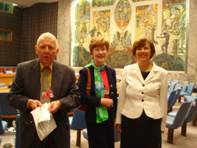
Ambassador DeLuca, V.P. Nina Tassi, Fordham
U, Dean Elaine
Congress Fordham U